

That string of lights in the sky: a field guide to what you are probably seeing
Satellite trains, planets, rocket plumes and the other things most often reported as UFOs, plus how to record a sighting properly when none of them fit.
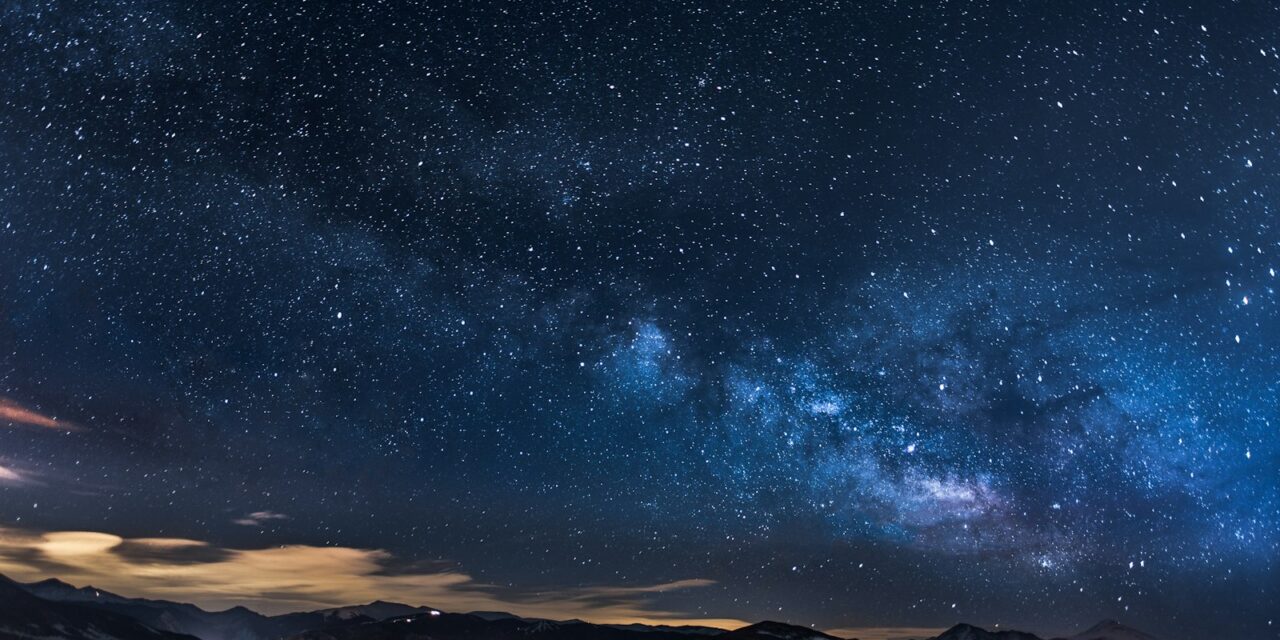
You step outside after sunset and see a row of evenly spaced lights gliding across the sky in silence. No blinking, no sound, perfectly straight. It looks like nothing you have ever seen.
It is one of the most reported sights of the last few years, and it has a known cause. So do most of the others. Here is how to tell them apart, and what to do when you cannot.
The satellite train
What you see: a straight line of a dozen or more bright dots, evenly spaced, moving together across the sky over a few minutes.
What it is: a batch of internet satellites, usually Starlink, shortly after launch. They are released together and travel in a line before spreading out and climbing to their working orbits. In the first days they are low and bright. Over the following weeks they separate and fade.
How to check: satellite-tracking websites and apps predict when a recent batch will pass over your location. If a pass was forecast for that time and direction, you have your answer.
A single satellite, or a flare
What you see: one steady point of light crossing the sky, sometimes brightening sharply for a few seconds, sometimes fading out mid-sky.
What it is: a satellite catching sunlight. A sudden flash happens when a flat surface reflects the sun toward you. The fade-out is the satellite passing into Earth’s shadow.
This one fools trained observers. In the Pentagon’s most recent report on unidentified sightings, analysts attributed 238 of the 370 cases they resolved to satellite flaring.
The space station
What you see: a very bright, steady white light moving quickly from west to east, crossing the sky in about four to six minutes.
What it is: the International Space Station. It is often the brightest thing in the sky after the Moon. NASA publishes pass times for any location.
A planet
What you see: an intensely bright light low in the sky that stays put, sometimes appearing to shimmer or change color.
What it is: usually Venus or Jupiter. Near the horizon, the atmosphere makes a bright planet or star flicker through red, green and blue. Stare at any bright point against a dark sky and it can also appear to drift. That is a well-documented trick of the eye, not movement.
A rocket launch
What you see: a glowing, expanding cloud shaped like a jellyfish or a spiral, sometimes with a bright point at its head. It can be visible for hundreds of miles.
What it is: rocket exhaust lit by the sun at high altitude while the ground below is already dark. People on the West Coast see these after launches from California’s central coast.
Aircraft and drones
What you see: lights that hover, turn sharply or move in formation.
What it is: often aircraft or drones. Planes carry a red light on the left wing, green on the right and flashing white strobes. One flying straight toward you can seem to hang motionless for minutes. Drones can hover and change direction abruptly, and light-show drones fly in formation.
How to check: flight-tracking apps show most aircraft in real time. Military flights and small drones will not appear.
A meteor
What you see: a streak lasting a second or two, sometimes a brilliant fireball that breaks apart.
What it is: a bit of rock or dust burning up. Slow, long-lasting fireballs that fragment are often returning space debris.
When none of these fit
Most sightings are explained. Some are not, usually because there is too little information to work with. If you see something you cannot place, the most useful thing you can do is record it well.
- Time and date, to the minute.
- Your location, as precisely as you can.
- Direction and height. Which compass direction, and how far above the horizon. Your fist at arm’s length covers about ten degrees.
- Duration and movement. How long, which way, any change in speed or direction.
- Video with a reference point. Keep a rooftop, tree or the horizon in frame, and hold the phone steady. Do not zoom. A zoomed, shaky point of light tells nobody anything.
- Sound, or the lack of it.
- Other witnesses, and whether they saw the same thing independently.
Then check the trackers. If a satellite pass, a launch and local air traffic are all ruled out, you have something worth reporting, and worth telling us about.